Respiratory system anatomy in 3D
The respiratory system carries air from the nose and mouth through the pharynx, larynx, trachea and bronchi into the lungs, where oxygen and carbon dioxide are exchanged with the blood. In this free 3D model you can see the lungs in the chest, isolate the airway tree and follow every segmental bronchus into its lobe.
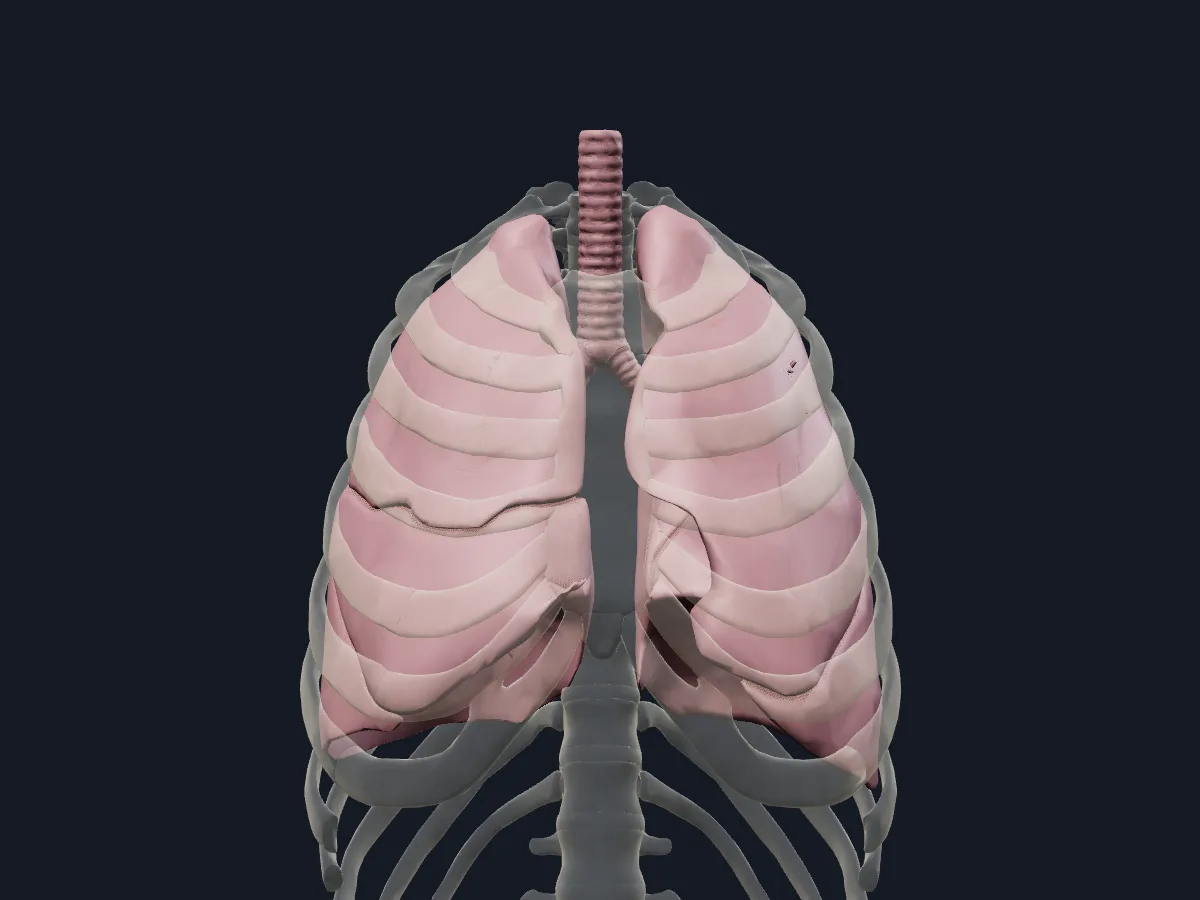 Image: Cogni Anatomy · CC BY-SA 4.0 · Sources: BodyParts3D, Z-Anatomy
- The right lung has 3 lobes (superior, middle, inferior); the left lung has 2 (superior, inferior)
- The trachea is about 10–11 cm long and held open by 16–20 C-shaped cartilages
- The trachea divides at the carina at the level of the sternal angle (T4–T5)
- The right main bronchus is shorter, wider and more vertical than the left
- 10 bronchopulmonary segments in the right lung and 8–10 in the left
Structure of the airways and lungs
The trachea runs from the larynx to the carina and divides into the right and left main bronchi. Each main bronchus gives lobar bronchi, one per lobe, and each lobar bronchus divides into segmental bronchi. A segmental bronchus and the lung tissue it supplies form a bronchopulmonary segment, the basic surgical and functional unit of the lung.
The right lung has horizontal and oblique fissures separating three lobes. The left lung has only an oblique fissure; its superior lobe includes the lingula, which corresponds to the right middle lobe, and the cardiac notch where the heart lies.
What the 3D model shows
The model contains 106 respiratory parts: the epiglottis, the trachea, both main bronchi and the bronchial tree of every segment, labelled apical, posterior, anterior, superior, lateral and medial, superior and inferior lingular, and the four basal segments. The five lung lobes are separate parts. You can see the system inside a see-through skeleton, on its own, or as the airway tree alone with the lobes removed.
How to study the respiratory system
Start with the system in the chest in the anterior view and note how high the lung apices reach and how low the lobes extend at the back. Open the isolated view and turn it to the lateral views to see the fissures between the lobes. Then switch to the airways view, follow the right main bronchus into the middle lobe and name its lateral and medial segmental branches. Repeat for each lobe, then list the bronchopulmonary segments of both lungs from memory.
Views in the 3D model
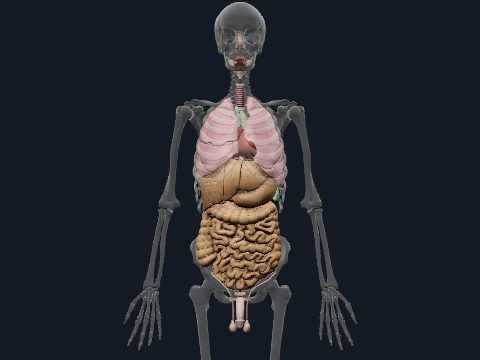
The lungs and airways in place inside a see-through skeleton.
Open this view in 3DImage: Cogni Anatomy · CC BY-SA 4.0 · Sources: BodyParts3D, Z-Anatomy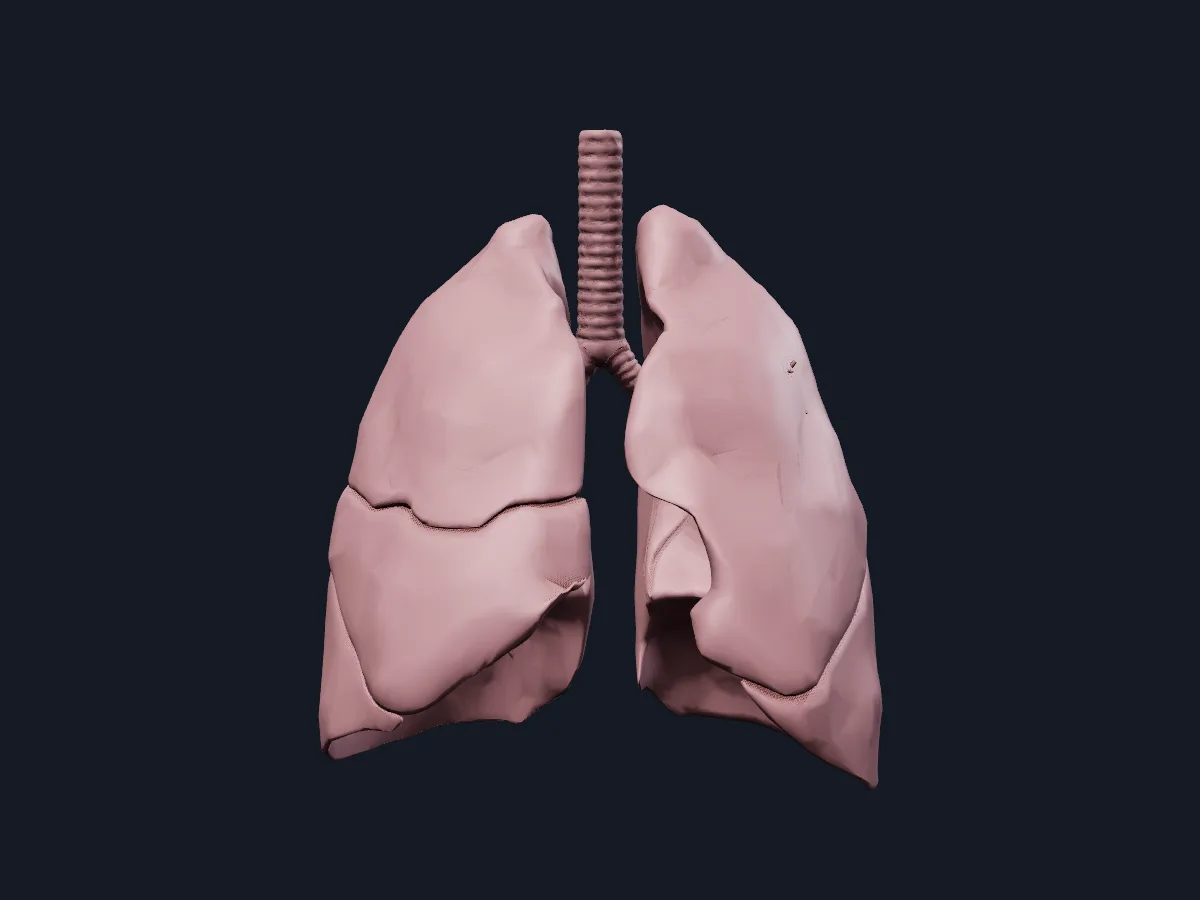
The lungs and bronchial tree on their own, without surrounding structures.
Open this view in 3DImage: Cogni Anatomy · CC BY-SA 4.0 · Sources: BodyParts3D, Z-Anatomy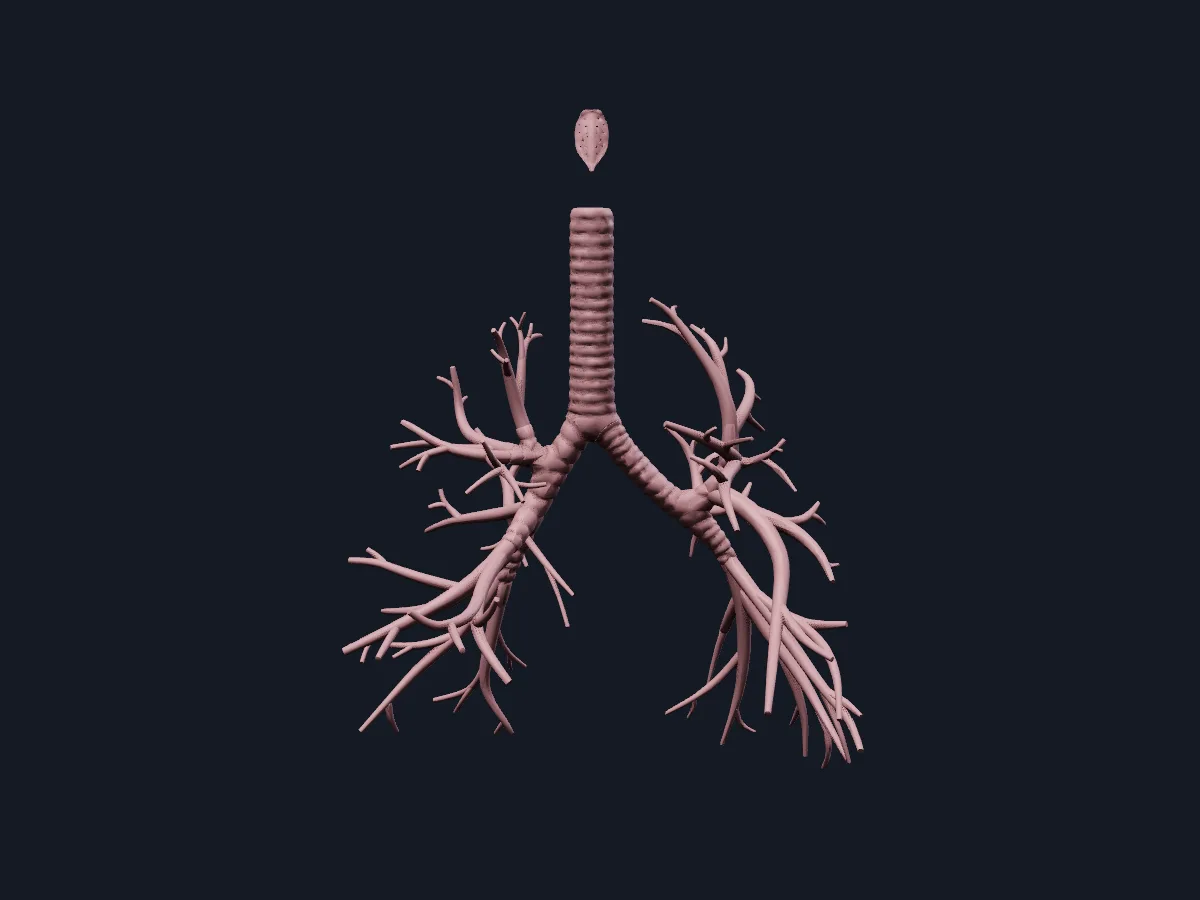
The epiglottis, trachea, main bronchi and segmental bronchial trees, without the lung lobes.
Open this view in 3DImage: Cogni Anatomy · CC BY 4.0 · Sources: BodyParts3D
What is in this model
107 3D parts. Names follow the Foundational Model of Anatomy (FMA).
- Respiratory 107
- Anterior basal segmental bronchial tree
- Anterior segmental bronchial tree
- Apical segmental bronchial tree
- Epiglottis
- Inferior lingular bronchial tree
- Inferior lobe of left lung
- Inferior lobe of right lung
- Lateral basal segmental bronchial tree
- Lateral segmental bronchial tree
- Main bronchus
- Main bronchus proper
- Medial basal segmental bronchial tree
- Medial segmental bronchial tree
- Middle lobe of right lung
- Posterior basal segmental bronchial tree
- Posterior segmental bronchial tree
- Superior lingular bronchial tree
- Superior lobe of left lung
- Superior lobe of right lung
- Superior segmental bronchial tree
- Trachea
Questions
How many lobes do the lungs have?
Five in total: three in the right lung (superior, middle and inferior) and two in the left lung (superior and inferior).
Why does the left lung have only two lobes?
The heart takes up space on the left side of the chest, leaving the cardiac notch in the left lung. The lingula of the left superior lobe corresponds to the middle lobe of the right lung.
What is a bronchopulmonary segment?
The part of a lung supplied by one segmental bronchus and its branch of the pulmonary artery. Each segment is pyramid-shaped, with its apex towards the hilum.